The Implanted Word (James 1:19-21)
Main Idea: We can only be saved by receiving the Word of God, Who God implants in us by grace.
Text:
I have another golf illustration for you this morning, even though I really know very little about golf. Professional golfer Tommy Bolt was playing in Los Angeles and had a caddy with a reputation of talking too much. Before he teed off, Bolt told his caddy, “Don’t say a word to me. And if I ask you something, just answer yes or no.” During the round, Bolt found his ball next to a tree, where he had to hit it under a branch, over a lake and onto the green. He got down on his knees and looked through the trees and sized up the shot.
“What do you think?” he asked the caddy. “Five-iron?” “No, Mr. Bolt,” the caddy said. “What do you mean, not a five-iron?” Bolt retorted. “I’m the professional. Just watch this shot.” The caddy rolled his eyes and again said, “No-o-o, Mr. Bolt.”
But Bolt took his five-iron and hit the ball perfectly, and it stopped about two feet from the hole. He turned to his caddy, handed him the five-iron and said, “Now what do you think about that? You can talk now.” “Mr. Bolt,” the caddy said, “that wasn’t your ball.”
The sermon this morning is about how we listen, and speak, and communicate with one another, especially when we disagree with one another.
I think today’s message is universally applicable. If you ever talk with another person, today’s sermon is for you. If you’re ever in the same room as another person, today’s sermon is for you. And if you’re married, or you have kids, or if you ever get on social media, then today’s sermon is definitely for you.
Far too often, we find ourselves in heated conversations. All the time, we see people talking over one another, expressing their opinions, or even their understanding of truth and morality, but neither side rarely ever takes the time to understand where the other person is coming from.
As with many things, God calls us, His Church, to be different from the rest of the world. And that ought to show itself even through how we communicate with each other and the world as we share the greatest news ever given.
James 1:19-21.
Know this, my beloved brothers: let every person be quick to hear, slow to speak, slow to anger; for the anger of man does not produce the righteousness of God. Therefore put away all filthiness and rampant wickedness and receive with meekness the implanted word, which is able to save your souls. (James 1:19-21)
Father, help us to put this into practice. Help us to put You first, and therefore put our own egos aside. Help us to be humble, like Jesus, trusting in Him to save our souls. In Jesus’s name, Amen.
What are some of the most important lessons you’ve learned in life? There was a fifteenth century monk named John Lydgate who first said:

So if you make it your goal to please everyone all the time, you’ll never be able to do it. Therefore, we shouldn’t be so concerned with pleasing everyone. It’s far more important to do what’s right, seeking to please not men, but God. And I think that’s a pretty important life lesson. Here’s another one.
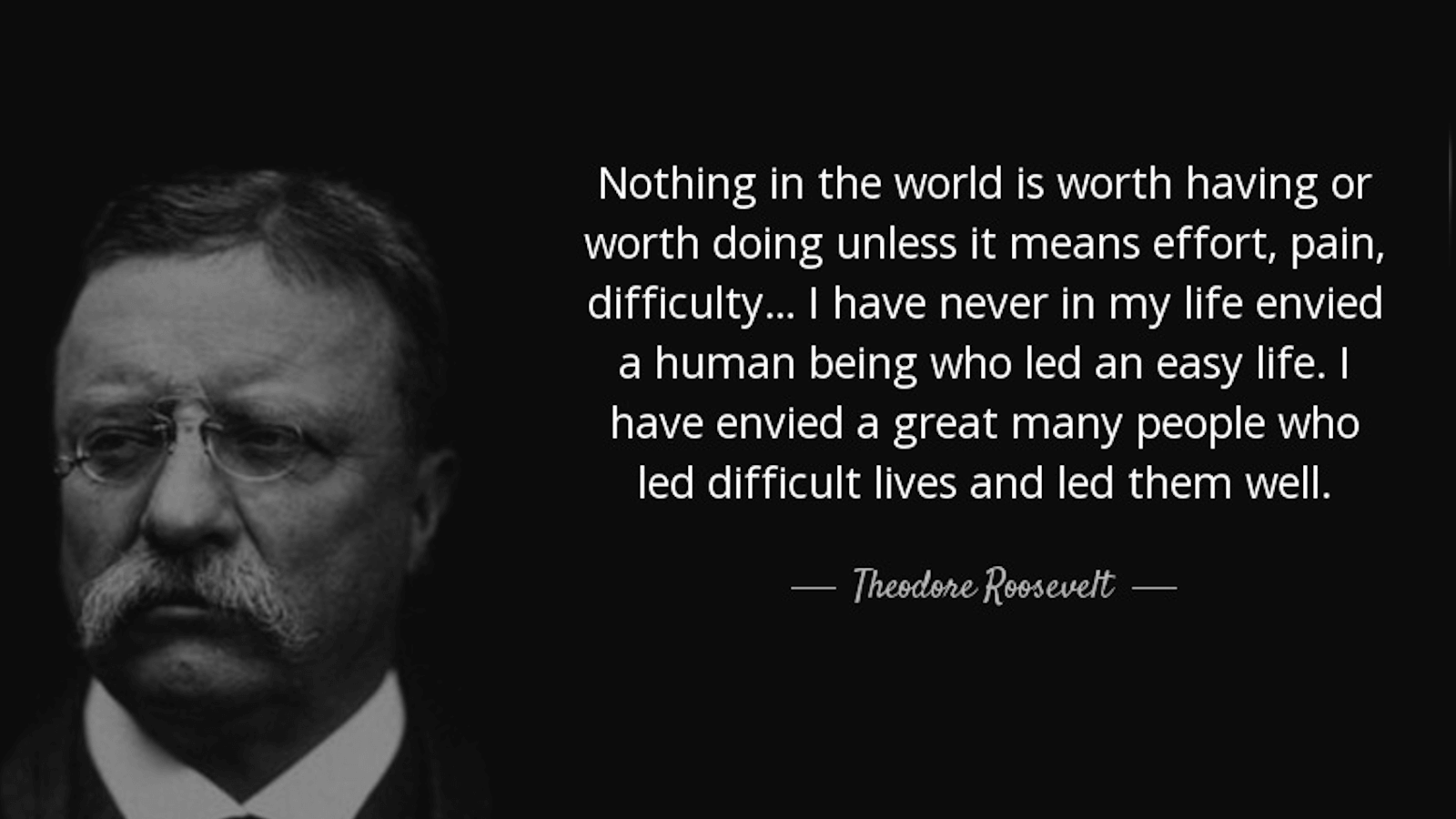
And I think that’s an important lesson, too. It encourages us to pursue the life that’s right rather than the life that’s easy.
I try to keep these kinds of lessons in mind whenever I’m at a crossroads in life. I shouldn’t choose a path just to please people, and I shouldn’t choose a path just because it’s easy. That’s pretty important advice for a pastor.
So, what are some life lessons that you think are important? The congregation responds.
Some of these life lessons seem so incredibly obvious, yet so easy to forget about, right?
Our Scripture this morning begins with the words, “Know this.” In this passage, James gives us teaching and encouragement that’s so incredibly easy to miss, and even easier to disregard.
It’s really sad how so often we know what we ought to do, yet we don’t do it.
For example, I know that I need to lose about twenty pounds in order to feel healthier. I weigh about 215 right now, and I know that when I weigh under 200 pounds, I just feel better. I breathe better. I can run a few yards without feeling like I ran a marathon. And my gut doesn’t get in the way when I tie my shoes. And every day for lunch, I know that I ought to eat something healthy, like a salad, or fruit. But if we have pizza rolls and ice cream in the fridge, I almost inevitably choose those instead.
So I’m not sure that I really know that I need to lose twenty pounds. I might think it sounds like a good idea, but I don’t really see it as something that I need to do. And until I get it into my head that it’s a necessity, it most likely won’t become a reality in my life.
So, what does James tell us to know? James writes in verse 19:
Know this, my beloved brothers: let every person be quick to hear, slow to speak, [and] slow to anger; (James 1:19)
Once again, James isn’t just saying that we should know these things in our heads, but that we should truly embrace these things in our lives.
There are three things. We’ll look at each of these on their own.
First, be quick to hear. You’ve probably heard it said that God gave us two ears and one mouth so that we’ll listen twice as much as we speak. Well, I don’t know if that’s why God gave us two ears and mouth, but it is pretty good advice.
A self-absorbed man once became convinced he was losing his hearing because people would tell him that they told him things, but he didn’t remember them telling him. So he went to see his doctor, who pulled out a pocket watch, held it to the man’s ear, and asked “Can you hear this ticking?” “Of course,” the man replied. The doctor took a step back and asked the question again. The man concentrated and said, “Yes, I can hear it clearly.” Then the doctor walked across the room and repeated the question a third time, and the man replied, “Amazingly, I think I can!” “Sir,” the doctor concluded, “there is nothing wrong with your hearing. You just don’t listen.”
You see, being quick to hear isn’t just talking about the quality of our ears. Being quick to hear in our current situation today means to take the time to actually listen to the people who speak to us, especially when they disagree with us. We shouldn’t just assume we know where people are coming from. We should ask them questions, and seek to understand them, and not just so that we can prove them wrong, but so that we can empathize with them, even if we still disagree with their position.
I think the obvious example is how we respond to our society regarding abortion. I hope you know that abortion is wrong. Killing babies inside the womb for the sake of convenience is morally reprehensible and unjustifiable. But if you find yourself face to face with someone considering an abortion, I hope that you don’t just shout at them to condemn them. Take the time to listen to them. Weep with them. Show them compassion and even put yourself in their shoes. Abortion is wrong, and we should never approve of it at all, but that doesn’t mean that the person considering abortion doesn’t need our love. Because they probably need it then more than ever!
That goes for other situations, too. If a friend is considering suicide, yelling at them to condemn their feelings is probably the worst thing you can do. Instead, you listen to them. Make sure they know you’re there for them. Simply being with them when they’re hurting will go a million times further than telling them how wrong they are for having those thoughts.
Being quick to listen in those kinds of scenarios is incredibly difficult. We have strong convictions about abortion and suicide based on God’s word, and we know that both are murder, disrespecting the image of God in people. But even then, we ought to hate the sin and love the sinner, just as God does for us.
Now, if we can practice that with a difficult issue such as abortion, and I hope that we can, certainly we can practice it when it comes to more ambiguous issues too, right? If a relative votes differently than you, telling them that they’re an idiot isn’t going to help your relationship with them down the line. Things like politics, immigration, economics, gun control, climate change, and the best way to address racial discrimination are all important issues, and worth having conversations about. But as Christians, we need to recognize that all people are made in the image of God, and we need to be quick to hear others, rather than just shouting out what we believe about these things.
And, by the way, even genuine Christians disagree on all of these issues, so we need to be quick to hear one another as well.
I confess that I’m not always quick to hear. Rather than patiently and lovingly listening to others, I often jump to conclusions about what I think people are saying and interrupt the people I’m talking with. And I think maybe I’m not the only one in this room who does that.
I think the reason we’re often not quick to hear, is because of the second thing James mentions in verse 19. He writes, “Be quick to hear, slow to speak.” We’re often not quick to hear because we’re often not slow to speak.
I see these as two sides of the same coin. If we were quick to hear, we would be more likely to be slow to speak. And if we were slow to speak, we would more likely be quick to hear. Being slow to speak, though, means not only that we listen first, and listen more, but that we choose our words carefully. That we don’t speak rashly, but intentionally. Paul put it this way in Ephesians 4:
Speaking the truth in love, we are to grow up in every way into him who is the head, into Christ. (Ephesians 4:15)
We aren’t just to speak truth, but we’re to speak truth in love. God didn’t just give us the Bible so that we can tell other people how wrong they are, but so that we can show them how much God loves them. The goal of communication is that we, and them, and all of us would grow up and be like Jesus.
I fail at this a lot as well. I realize after I say things that I probably shouldn’t have said those things, or that I should have at least said those things a little more carefully.
This is part of why I usually write out my sermons word for word before I preach them. I want to be very careful in how I share God’s word with you. And especially when there are things that could be easily misunderstood or taken the wrong way, I want to do all that I can to make sure that my misspoken words don’t get in the way of you knowing and believing that Jesus loves you.
Related to both of these things, being quick to hear and slow to speak, is the third thing James mentions. He writes, “Be quick to hear, slow to speak, slow to anger.” When it comes to all the hot topic issues that I’ve mentioned, and so many more, we can so easily get our blood boiling when our convictions are challenged. When we’re quick to anger, we’re far less likely to be quick to hear or slow to speak. We explode.
So James tells us the reason why we should be slow to anger. Verse 20.
for the anger of man does not produce the righteousness of God. (James 1:20)
So it’s not that anger itself is wrong, it’s that our anger usually doesn’t lead us to do the right things. Anger itself isn’t the problem. In fact, God’s anger is righteous. It’s called His wrath. And God’s wrath is far more intense than we can ever muster up. But the difference is that God’s anger is always justified, and He never acts sinfully.
Usually when we think about God’s anger, we think about when Jesus filled the tables in the temple and drove the money-changers out with a whip, because they were doing business where there should have been space to allow Gentiles to come to pray and worship. And that’s certainly an example of His righteous anger. It shows that God is passionate about bringing in all people to come and worship Him. But I think there’s an even more obvious example of God’s wrath poured out, because it’s what all of the Bible points to.
You see, God intensely hates all sin. And that’s bad for us because we’ve all sinned. But the way that He dealt with our sin was not with a whip, but by sending His Son Jesus to the cross. He took the penalty of our sin, which He hates, upon Himself, so that we could experience His love and forgiveness.
Contrast this to how we usually get angry. We lash out. Or, we hold grudges. At the very least, we keep a record of wrongs so that we can bring them up someday in the future when we’re in an argument.
And even if you don’t intentionally keep a record of wrongs, it’s so easy to bring to mind all the ways someone has offended you in the past whenever they offend you in the present, and therefore you haven’t truly forgiven them.
A wise man, if you can call him a man, once said:

Our anger does not produce the righteousness of God. But God’s anger literally produces righteousness. When our sin made God angry, His anger meant that Jesus went to the cross to deal with our sin, so that our sin would be wiped away, and so that God’s righteousness would be produced in us.
You see, when Jesus got angry in the temple, He didn’t just flip tables, He ultimately gave His life for the very people who sinned against Him.
What do you get angry about? I encourage you first to think about whether it’s even something worth getting angry about, or if it’s only something you get angry about because of your ego. Second, be slow to anger, because even if it’s righteous anger, we can so often act unrighteously out of that anger. And third, carefully think about what you can actually do to glorify God in regards to this issue.
So, if you’re angry about the sin of abortion, don’t just yell about it and call it righteous anger. Do something about it. Donate your time and money to a crisis pregnancy center. Foster and adopt some kids. Be a support to single or pregnant moms. Allow your God’s righteous anger in you to produce God’s righteousness in you.
Verse 21 explains how that happens.
Therefore put away all filthiness and rampant wickedness and receive with meekness the implanted word, which is able to save your souls. (James 1:21)
As James reminds us, even after we’ve trusted in Jesus, we still need to put away filthiness and wickedness. We need to allow God to remove them out of our lives. So often, we cling to our unrighteous anger, filthiness, and wickedness. And we actually think that we’re justified in doing so. And sometimes when we compare ourselves with the people around us, we can feel like we’re morally superior. But God’s standard for us isn’t just to be better than everyone else. It’s moral perfection. So any filthiness and wickedness disqualifies us from the kingdom of God.
And since we’ve all sinned, that’s a problem. But since God loves us, God sent the solution. God gave us His Word.
But God didn’t just give us His word so that we might try to live better. He implanted the Word inside of us. Deuteronomy 30:14 says:
But the word is very near you. It is in your mouth and in your heart, so that you can do it. (Deuteronomy 30:14)
God’s plan from the beginning wasn’t just to give us the Bible, and then see who was capable of living up to it. No, His plan was to put His Word inside of us so that we would be saved by it. And that’s what God did when He sent Jesus.
The beginning of the book of John makes this clear.
In the beginning was the Word, and the Word was with God, and the Word was God. He was in the beginning with God. (John 1:1-2)
Then verse 14 says:
And the Word became flesh and dwelt among us. (John 1:14)
That’s Jesus. Jesus is the Word implanted within us, and when we receive Him, that alone is able to save our souls. Entering God’s heaven is only possible if we’re morally pure, without any filthiness or wickedness. And receiving Jesus cleanses us from all anger, and filthiness, and wickedness.
You see, what I’m saying is, we can only be saved by receiving the Word of God, Jesus, Who God implants in us by grace.
But that’s not a license then to continue to live in wickedness. It’s actually the exact opposite. When we trust in God’s Word, Jesus, He helps us to apply God’s word, the Bible, to our lives. We begin to want to serve and glorify God, not to earn anything from Him, but out of joy.
So, if you know that you’ve been so full of anger, Jesus invites you to leave it behind as you trust in Him. He invites you to be saved by receiving Him, because He alone can save you.

Pastor Chris Huff has been with us since July 2009. He and his wife, Abby, have four children. Chris is originally from St. Louis, MO and even though he was raised as a city boy, he has a small town heart. Chris is all over the internet, so you can find him on Facebook, Twitter,… (read more)

James is one of the most simple and practical letters in the New Testament written to encourage and instruct believers. The fact that this letter is in the Bible is interesting, though, because it actually almost didn’t make the cut. Some well-known Christians throughout history didn’t like it or think that it measured up to… (read more)